Beyond Old Trafford: How Manchester United Became Football's Biggest Global Obsession
Manchester United have not won the Premier League since 2013. They finished the 2024-25 season 15th, their worst league placing since relegation in 1974, and have churned through managers in search of a way back. And yet, no club generates more noise. Every transfer rumour, academy breakthrough, ownership row and dressing-room leak is amplified far beyond what the results alone would justify. So why does United still feel bigger than the table?
That constant attention spills into every corner of football culture, including the betting markets, where many Manchester United fans explore no deposit bonuses on dedicated betting sites before kick-off. 18+. Please gamble responsibly. The deeper question, though, is where all that gravity comes from.
Why Manchester United Still Commands Global Attention
How success created football's most recognisable institution
The foundation is unmatched success. United hold the record for English league titles, with 20, including a record 13 Premier League crowns, and have lifted the European Cup three times, in 1968, 1999 and 2008. The treble-winning side of 1999 remains one of the sport's defining teams. Decades of winning, broadcast to a worldwide audience during the Premier League's boom years, built a brand recognised on every continent.
Why results alone never define the club's relevance
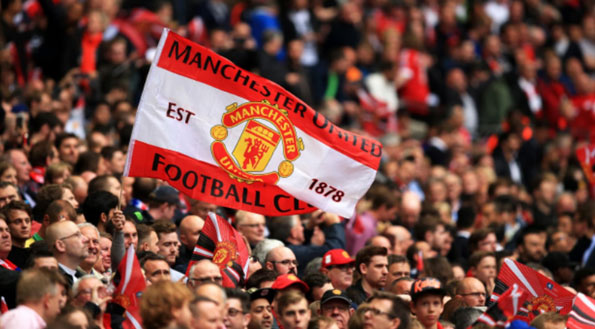
Crucially, that relevance no longer depends on winning. United are routinely described as having one of the largest fanbases in world football, estimated in the hundreds of millions, and that scale means interest persists through lean years. The club is a running story that people stay invested in, win or lose.
The Historical Foundations of Manchester United's Identity
United's identity was forged in drama and resilience. The club was transformed under Sir Matt Busby, whose young side, the Busby Babes, was devastated by the Munich air disaster of February 1958, when eight players lost their lives. Busby rebuilt, and a decade later United became the first English club to win the European Cup, in 1968. That blend of tragedy, recovery and faith in youth, traced in the club's own history, still shapes how supporters see themselves today.
That identity was then supercharged by Sir Alex Ferguson, who won 38 trophies across 27 years and turned United into a commercial colossus before stepping down in 2013. Faith in youth runs just as deep: an academy graduate has featured in nearly every Manchester United matchday squad since 1937, an unbroken run that no other English club can match, and one that produced the celebrated Class of 92.
Why Manchester United Dominates Football Conversation
The pressure of permanent visibility
Few institutions are scrutinised so relentlessly. A managerial decision at United is debated more loudly than a trophy at most clubs. Real Madrid, Barcelona and Liverpool command global followings too, but United's particular mix of history, commercial reach and supporter scale keeps it permanently in the headlines, for better and for worse.
How social media changed the supporter experience
The digital age has intensified everything. Fan channels, podcasts and social media turn every result into instant, amplified reaction, trapping the club in a perpetual cycle of analysis. That endless visibility helps sustain relevance, but it also magnifies instability, making calm rebuilding far harder than it was in earlier decades.
One Club, Millions of Different Supporters
United's support is really two overlapping worlds. In Manchester and across Britain, loyalty is local and inherited, passed down through families and neighbourhoods. Globally, millions adopted the club during the Ferguson-era Premier League boom. The two groups experience United differently, yet both feed the same vast ecosystem, which is part of why the club is so often called the world's most popular football club.
Can Manchester United Ever Escape Its Own Expectations?
Here lies the paradox. United's greatest asset, its global scale and expectation, is also its heaviest burden. Under the Glazers' ownership and Sir Jim Ratcliffe's INEOS, which took sporting control in 2024, the club is rebuilding both its squad and, potentially, its stadium, with plans floated for a new ground beside the current Old Trafford. But no modern project can easily satisfy demands built on decades of dominance, and patience is scarce when every setback plays out in front of a worldwide audience. Perhaps that is the truest measure of the club's place in the game: even in imperfect eras, with the trophies on pause, Manchester United remain impossible to ignore, and their story is followed more closely than most rivals' triumphs. |