Manchester United is a football club with a heritage spanning almost 145 years and has achieved many successes throughout its history. It was the first English club to compete in the European Cup and has won a total of 70 titles to date. Here, we will take a closer look at its glorious history and discuss its achievements: below, you will find the most important things you need to know about Manchester United FC.
History of the Club: From 1878 to 2025
The club's history dates back to 1878, so we will try to summarize over a century of history. We will do this by sharing the most important periods in Manchester United's history in a table format. However, before we begin, if you’d like to make tactical decisions like this club while trying your luck, we recommend checking out the Fibonacci roulette system on the RouletteGuru platform.
ERA |
WHAT HAPPENED? |
1878 – 1945 |
The club was founded under the name “Newton Heath LYR” and used this name until 1902. It changed hands several times during the First and Second World Wars and failed to achieve any notable success. |
1945 – 1969 |
Matt Busby took control of the team and, thanks to his wise decisions, the team began competing in the First Division and won its first FA Cup title. Busby remained as manager until 1969. |
1969 – 1986 |
The team was not as successful as it had been under Busby until Ron Atkinson became manager. After that, it went on to win the FA Cup titles in 1983 and 1985. Atkinson continued in his role until 1986. |
1986 – 2013 |
Alex Ferguson took over as manager and, in addition to the 1990 FA Cup title, also won the first UEFA Cup title. The club competed in the European Super Cup for the first time and became the first football team to win the FA Cup, Premier League, and UEFA Champions League simultaneously between 1998 and 1999. Ferguson achieved many more successes until his retirement in 2013 and made difficult decisions such as selling Cristiano Ronaldo to Real Madrid. |
2013 - 2025 |
In 2014, under Louis van Gaal's management, the team won its 12th FA Cup title and achieved one of the biggest wins in Premier League history (a 9-0 victory over Southampton). In 2022, Erik ten Hag became the manager. |
Meaning of the club crest
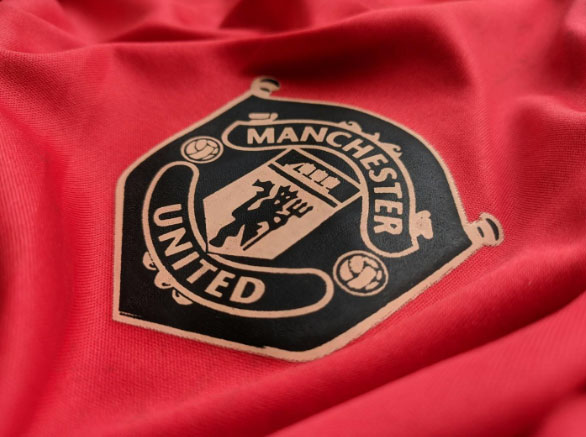
The team's crest design was inspired by Manchester City's coat of arms. Although it has undergone many color and design changes throughout history, the “Red Devil” symbol has remained almost unchanged—this symbol originates from the team's nickname (Red Devils). Today, the only thing remaining from the original crest is the ship motif located just above the red devil symbol.
Grounds of Manchester United FC
The team has played at several grounds over its more than 100-year history, but we can say that it has essentially had three stadiums:
-
North Road: Used until 1893. It had a capacity of only 12,000.
-
Bank Street: Used until 1910 and located in Clayton. Its capacity was increased to 50,000 over time.
-
Old Trafford: The stadium the team has used since 1910. It has a capacity of 77,000 and has undergone numerous renovations over time.
In the near future, we can say that Old Trafford will also become a thing of the past, as plans are in place to build a new stadium.
The new ground
The new ground planned for Manchester United will replace Old Trafford and will be built right next to the current stadium. It is planned to have a capacity of 100,000 and is expected to be completed before 2035. It is currently called New Trafford Stadium, but the name may change over time.
Achievements of Manchester United FC
It is no surprise that a club with over 140 years of history has achieved numerous successes over time. We cannot list them all here, but we can share the most important ones in a table:
EVENT/CHAMPIONSHIP |
TOTAL TITLES |
Premier League |
20 |
FA Community Shield |
21 |
FA Cup |
13 |
EFL Cup |
6 |
UEFA Champions League |
3 |
The team's most recent title was the 2023-24 FA Cup. We are confident that they will continue to achieve many more successes and win titles: Manchester United FC is among the most successful English football clubs of all time.
|