|
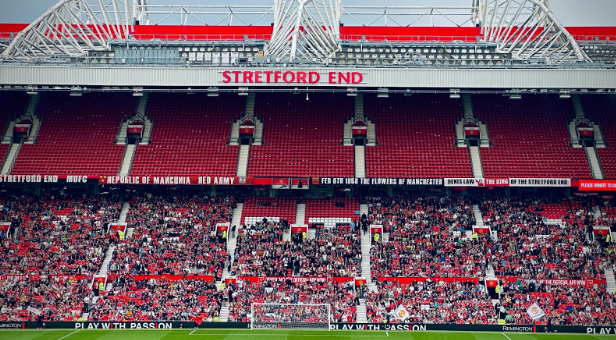
Old Trafford is more than a football ground. It is a pressure system, a data set, and a century of psychological weight pressing down on every visiting team that walks through the tunnel.
Manchester United have played there since 1910, and across that time the ground has generated one of the most statistically remarkable home records in world football. The numbers behind that record tell a story that is now being studied not just by coaches and analysts, but by fans and data professionals across multiple continents who want to understand what the “Theatre of Dreams” produces in measurable outcomes.
The 2010-11 Season: Home Dominance as a Title Blueprint
Manchester United’s 2010-11 Premier League title season produced one of the most commanding home records the competition has ever seen. The club won 18 of their 19 home league matches at Old Trafford, drawing only one, which came against West Bromwich Albion. That single dropped point was the only thing preventing United from becoming the first top-flight side in 119 years to win every single home league fixture in a season.
That home dominance translated directly to a record-breaking 19th English top-flight title, finishing nine points clear of Chelsea, with a goal difference of plus 41 from 78 goals scored and 37 conceded across the full campaign.
When the 2010-11 win rate at Old Trafford is calculated across those 19 Premier League home fixtures, it comes to approximately 79%, a figure that quantifies why United’s away form, which produced just five wins all season, barely mattered to the title outcome.
2022-23 and the Fortress Rebuilt
In a markedly different era, Manchester United’s 2022-23 season under Erik ten Hag demonstrated that Old Trafford’s statistical weight had not disappeared even through years of transition. United secured 15 home wins in the Premier League that campaign, going unbeaten at Old Trafford in the league from their opening-day defeat to Brighton onwards.
The home points total of 48 from 19 matches was the second highest in the division that season, beaten only by Manchester City’s 52. United scored a record 81 league goals at home that season, the most in Premier League history.
The defensive numbers matched the offensive output, with the club earning 17 clean sheets in the league alone, enough for David de Gea to claim the Golden Glove. That combination of offensive volume and defensive solidity at home is precisely the kind of multi-variable data pattern that analysts now use to model expected home performance across a season.
The European Benchmark: 0.3 Goals per Game
The home advantage phenomenon at Old Trafford does not exist in isolation. Across European football broadly, teams score approximately 0.3 more goals per game at home on average, a figure consistent with research across UEFA competitions and the major domestic leagues.
Harvard researcher Ryan Boyko’s analysis of 5,000 English Premier League matches from 1992 to 2006, published in the Journal of Sports Sciences, found that for every additional 10,000 people attending a match, home team advantage increased by 0.1 goals. Old Trafford regularly operates near its current capacity of 74,310, meaning the crowd density alone generates a statistically meaningful uplift in expected performance.
Research on UEFA Champions League matches has further found that the winning probability for home teams across the 2021 to 2024 seasons sat at 61%, significantly above the 50% baseline that would suggest no venue effect at all.
Crowd Density, Travel Fatigue, and Advanced Variables
Modern analytics have moved well beyond simply counting home wins. The variables now incorporated into home advantage models include crowd density as a percentage of stadium capacity, opponent travel distance and overnight stays required before a match, altitude differences for certain European fixtures, weather disruption to away travel, and referee tendency data broken down by venue.
The crowd proximity factor is particularly relevant at Old Trafford, where the design of the stands places supporters close to the pitch relative to many continental stadiums, a characteristic that research suggests increases the psychological pressure on both visiting players and match officials.
These insights are increasingly used by analysts and fans alike, particularly in emerging U.S. markets where interest in Premier League data mirrors trends seen on major UK betting sites and studied by users of new UK online casinos, which rely heavily on historical performance metrics.
Never Lost From a Halftime Lead at Home
One of the most precise data points in Old Trafford’s long Premier League history is also one of the least widely quoted. Manchester United have never lost a Premier League home match at Old Trafford when leading at halftime.
Across the competition’s entire history at that ground, the record when leading after 45 minutes was 263 wins and 16 draws from those situations, with zero defeats. That statistic goes beyond general home advantage into something more specific: the ability of the home environment to sustain and consolidate leads rather than merely produce them.
It reflects both the psychological stability that a familiar venue provides to a home squad and the compounding pressure that Old Trafford places on visiting teams already chasing a result.
American Interest and the Data Economy of the Premier League
The analytical frameworks built around data like Old Trafford’s home record have found a rapidly expanding audience beyond the United Kingdom. Interest in Premier League match data in the United States has grown sharply as the league’s broadcast footprint in North America has expanded.
American analysts and fantasy sports managers now consume the same historical performance metrics, home and away splits, and expected goals figures that have long been standard reference points on UK betting sites and European sports analytics platforms.
The underlying data set is the same regardless of geography: decades of match-level records that establish home advantage as a quantifiable and commercially relevant phenomenon, not simply a romantic idea about home crowds.
The New Stadium and What It Means for the Data
The historical numbers attached to Old Trafford are, for the first time, operating on a countdown. In March 2025, Manchester United confirmed plans to replace the current 74,310-seat stadium with a new 100,000-seat venue, designed by Foster and Partners, built next to the existing site with the existing stadium to be demolished.
The project is estimated to cost over £2 billion and could be completed in time for the 2030-31 season. The new stadium’s bowl-like configuration is specifically engineered to amplify crowd noise, with architect Norman Foster describing the acoustic design as “cultivating a huge roar.”
If the 0.1 goals-per-10,000-spectators relationship identified in Premier League research holds in the new venue, the addition of roughly 26,000 extra seats to near-capacity crowds could theoretically add more than 0.2 goals of home advantage per match beyond current levels. Whether the new ground generates a data record comparable to the one Old Trafford has accumulated over 115 years is a question that will take decades to answer. |