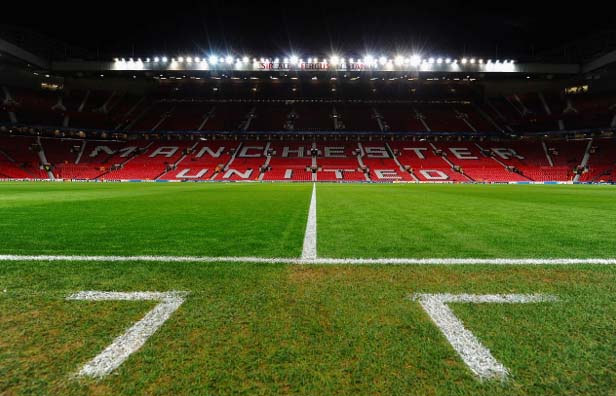
Manchester United's style of play has always been more than just a set of tactical decisions. It was part of a tradition inherited over decades. The team played fast, boldly, vertically. Fans knew that United would never settle for cautious, slow or sterile football. But after the end of the Sir Alex Ferguson era, the team's tactical identity began to change. At first slowly, imperceptibly, and then in leaps and bounds, which became more and more obvious with each new season.
I want to trace how this evolution took place, why the club struggled to find its style for so long, and what the consequences of this process have been. Manchester United has come a long way — and that journey says a lot about modern football.
The end of an era and the loss of consistency
When Ferguson left the club, he left behind more than just a championship team. He left behind a culture. His United was not just about results — it was about a philosophy of action. Under his leadership, the system was built over many years and was based on specific principles: high intensity, fast flanks, dominance in tempo and psychological stability.
The problem was that this system existed almost exclusively thanks to the coach himself. It was not a formalised club structure, as we see in modern projects today. And when Ferguson left, the club was left without an internal ‘framework’.
The management at the time believed that the team was ready for a stable transition, but in reality, much more was lost — what modern football experts call ‘philosophical continuity.’ United simply did not have a plan that would work after the legendary coach.
Tactical changes after the change of coaches
The first significant challenge arose under David Moyes. He came with a good reputation and the ability to build organised teams, but the tactics he proposed were too cautious for United. They relied on positional control, but without the speed and verticality that had been the foundation of the team for years. The biggest problem was that he tried to adapt United to himself rather than himself to the club's tradition. And that's when it became apparent that the team's style was beginning to blur.
Next came the Louis van Gaal era, which brought structure and control, but in his execution, football became slow, almost mechanical. At that point, the club was still searching for its identity, and instead of a recognisable attacking identity, it ended up with complex positional football based on endless passes without speed or aggression. It was a tactical experiment that bore some fruit but took away United's character.
The José Mourinho period was another shift towards a more pragmatic style. It was an era of structural discipline and organised defence. The team looked strong in big games but lacked the freedom in attack that was in its DNA. United became solid but ceased to be exciting. The problem was not only in the results — the team was losing its football personality.
Additional space for fan experience
Football now goes far beyond the stadium. Fans want not only to watch matches, but also to gain a deeper understanding of tactical approaches, assess player form and track trends in Manchester United's game. As a result, more and more platforms are emerging that combine sports analytics, statistics and entertainment content.
Between matches, some fans turn their attention to online platforms that offer casual entertainment while allowing them to keep track of the sports calendar. One such option is the Richard Casino app download, which many users consider a convenient way to supplement their football routine with light entertainment content. The app is often used to fill the gaps between rounds, watch short reviews of events or simply switch gears after intense matches.
Such services have become part of modern fan culture. They do not replace analytics and do not compete with football, but they create an additional space where everyone can maintain their interest in the game and stay involved in football even when there is a break on the pitch.
The gap between philosophy and player selection
A separate part of the evolution is the squad. After 2013, transfers became less and less systematic. In some seasons, players were bought for ball control. In the next, players were bought for a counterattacking style. And then — for a tough defensive approach.
The result was a mixture in which many players were strong individually but did not create a unified picture. The club invested in stars but did not form a tactical core.
Because of this, the team was unable to maintain a consistent pace and rhythm. For example, the flanks were built for different types of football — one player for a positional style, another for a vertical style. The centre of the field often lacked the necessary balance to combine defence and quick transitions.
United tried to play football, but often did so in ways that did not meet the coach's requirements.
The problem of pace and lack of mechanisms
One of the key problems that befell the team during the transition years was the lack of consistent playing mechanisms. This is not about individual combinations, but about systematic construction:
• how the team comes out of defence
• how it creates numerical superiority in the centre
• how it uses the flanks
• how it restores structure after losing the ball
During Ferguson's tenure, all these elements worked intuitively because the team had been learning to play this way for decades. After his departure, the coaches tried to impose new approaches, but such changes require time, stability and the right line-up.
Instead, United got a new playing model every two or three seasons. As a result, the structure always remained unfinished. At times, discussing their inconsistency felt a bit like asking “Michael Phelps how many gold medals?”—you know there’s brilliance there, but you’re reminded of how rarely it all comes together. The pace became uneven: one match was intense and exciting, the next was slow and predictable.
This was the most striking thing: the team could play high-level football, but could not do so consistently.
Psychology and the burden of greatness
United has always been a club that played with a certain emotional tension. But after 2013, the pressure only increased. The team wanted to return to its level, but the more it tried, the more the tension was felt.
The psychological background began to influence the style. The players acted cautiously and avoided risk. The boldness that had previously been the driving force behind United's attacks disappeared. Without it, the team was unable to create enough chances.
Caution became systemic. This manifested itself in everything:
• in rare vertical passes
• in slow pressing
• in unwillingness to play proactively
• in repeated plays through the centre
This psychological aspect became an invisible factor in the evolution of style, but its influence was enormous.
Lack of a long-term philosophy
The key question: why did United take so long to find its style?
The answer is simple — the club did not have a unified philosophy that would work regardless of the coaches. In modern football, leading clubs build their strategy years in advance. The coach may change, but the basic principles remain the same.
United, on the other hand, started from scratch every time. There is nothing worse for a team than constant reboots. When a club changes direction every two seasons, the squad cannot adapt, the system does not have time to take root, and the results become unstable.
The evolution of United's style was not smooth, natural or logical. It was a series of sharp turns that destroyed everything that had been built before.
Is there a chance to regain identity?
Manchester United remains one of the most influential clubs in the world. The identity of this club is too strong to disappear. But several important steps are needed to restore it.
1. A stable club philosophy
The club needs to define its basic style: intense football? Ball control? Verticality? Pressing? One day, this choice will become the foundation on which any coach will rely.
2. Selecting players for the system
The team cannot move forward if its lineup is a collection of incompatible profiles. Every transfer must work towards the overall concept.
3. A coach with a long-term vision
United needs not just a specialist, but an architect. Someone who will build a platform for the club for years to come.
4. Return of mentality
The team needs a psychological reboot. United's style is about courage, speed and a willingness to take risks. Without these qualities, the tactics will be incomplete.
Conclusion
The evolution of Manchester United's tactics after Ferguson's departure is a story of searching. The team lost its foundation and tried to rebuild it, but did so too often, without consistency or a unified approach. Coaching changes, chaotic transfers, psychological pressure — all of this gradually eroded the style that was once recognisable around the world.
But there is another side to it. United is a club that has always been able to reinvent itself. For this to happen again, a strategy is needed. A simple, clear and long-term one.
And if the club can regain the philosophy it has lost over the years, it will also regain the football that once made Manchester United a legend. |