|
Recurring Match Patterns That Define Manchester United’s Playing Style
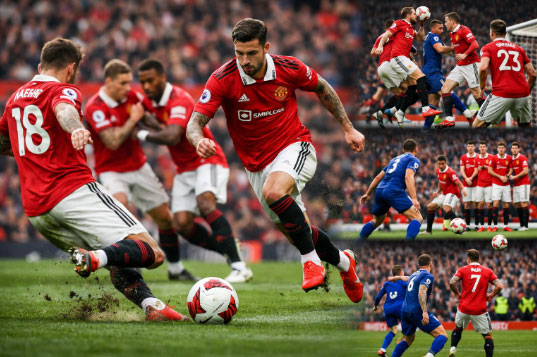
Football identity is usually explained with big words, yet it’s built from small habits that repeat: where the first pass goes under pressure, how the team reacts after losing the ball, which zones get crowded, and which zones get left open as the cost of attacking ambition. Manchester United are one of those clubs where the debate never stops, but the most useful lens is pattern recognition, because patterns show what the team defaults to when the match stops being scripted.
Sports betting discussions often track these patterns because patterns shape volatility, and a modest entertainment stake placed on betting sites in zambia can feel logical when the bettor treats it as one pre-planned decision with a fixed budget rather than as a sequence of in-play reactions. The risk is that big-club matches create emotional spikes, so people click more when the crowd noise rises, yet clicking more is usually chasing rather than analysis, especially when a missed chance triggers the urge to “correct” the moment with another bet. A calmer approach is picking one angle before kickoff, limiting markets, and watching the football properly, because repeated bets often track mood and mood isn’t a strategy. When the stake stays modest and the plan stays strict, sports betting remains entertainment, and the real reward becomes clearer: understanding how the match keeps returning to the same tactical themes.
Build-Up Under Pressure: When Calm Becomes a Weapon
A recurring theme in United matches is how much the build-up quality influences everything else, because when the team can progress cleanly, it attacks with more bodies and defends transitions with better shape, while rushed clearances create a loop of defending and re-defending. The small details here are technical and positional: the angles offered to the ball, the willingness to receive on the half-turn, and the patience to recycle rather than forcing a risky vertical pass.
When those details click, the match feels calmer, and when they don’t, the match feels like it’s being played on a treadmill.
Transition Reliance: The Fast Lane That Cuts Both Ways
United often look most dangerous when the game opens, because transition moments reward speed, direct running, and early decisions. The trade-off is that transition football can become addictive, since it’s exciting and visible, yet it also invites match volatility, because the opponent gets transition moments too if the team commits too many players forward without security.
This is where “rest defense” matters: who stays behind the ball, who covers wide, and who stops counters early without turning every turnover into a sprint race.
Wide Structure and Final-Third Choices
Another repeating pattern is how wide structure shapes chance creation, because width stretches the opponent and creates cutback lanes, while narrow play can overload the middle but risks congestion. Matches often swing on whether the wide players keep the ball long enough to draw defenders, then release at the right time, because early crosses without support become easy clearances, while delayed passes can open higher-quality chances.
The best final-third attacks look simple, yet they’re usually built on two or three small off-ball movements that create the passing lane before the pass is played.
Set Pieces: The Hidden Point Source
Set pieces repeatedly decide tight matches because they’re the one area you can rehearse with near-identical repetition, and United matches often show how much set-piece execution affects game state. A single well-delivered corner can turn a nervous match into a controlled one, while poor defending at a set piece can undo forty minutes of stability in one heartbeat.
Teams with consistent set-piece habits steal points, and teams with inconsistent habits give points away, and both outcomes feel “dramatic” even though they’re usually structural.
Pressing Cues and the Cost of Half-Pressing
Pressing succeeds when it is coordinated, because one player pressing alone is not a press, it’s a sprint with no reward. United matches often show the difference between a coordinated jump – blocking exits, compressing space, hunting the receiver – and a half-press that opens lanes behind the first line.
Half-pressing is expensive because it creates exactly what the opponent wants: time, space, and a clear route into midfield.
Betting Discipline and Recognizing Match Volatility
When patterns suggest volatility – open transitions, repeated turnovers, emotional swings – sports betting becomes riskier, which is why limits matter more than confidence. A small entertainment wager placed on bet can stay controlled when the person sets a fixed amount, makes one decision, and refuses to chase after a momentum shift, because momentum shifts are common and chasing turns common events into expensive ones. Markets move quickly during volatile matches, and quick movement tempts repeated clicks, yet repeated clicks are rarely informed, especially when the match is noisy and the viewer is emotionally invested. The safe habit is treating betting as an add-on, not as a running commentary, and stepping away after the bet is placed, because the match will give you enough drama without the extra stress. Kept modest and rule-based, sports betting remains entertainment, and the analysis stays clean: what keeps repeating, why it repeats, and what would need to change for the style to look more stable.
The Identity Question, Answered by Habits
United’s style debates are often framed as ideology, yet the real answer is practical: the team becomes what it repeatedly does under pressure. When build-up is calmer, transitions are protected, pressing is coordinated, and set pieces are consistent, the identity looks coherent, and when those pieces wobble, the identity looks like a collection of moments rather than a plan. |