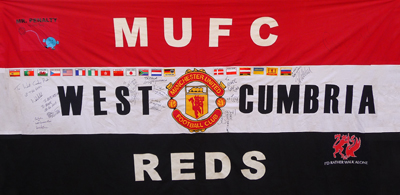
Manchester United Football Club stands at the pinnacle of world sport, like a giant oak tree with roots stretching deep into England's industrial era. Known as the Red Devils, this team doesn't just collect trophies — it weaves a tapestry of drama, triumph, and heartbreak that captivates millions of fans around the world. Founded in 1878, the club has evolved from a modest railway team into a global phenomenon, where every victory is an explosion of emotion and every defeat is a lesson in resilience.
 |
When the workers at the Manchester railway depot decided to form a football team, they had no idea they were laying the foundations for a legend. Originally named Newton Heath Lancashire and Yorkshire Railway, the club was born in an era when football was entertainment for the working class, not a billion-dollar business. Those early years were fraught with struggle: financial difficulties, moving from field to field, yet the players' passion kept the team afloat, like a saving fire on a cold Manchester night. You can apply a similar principle when playing at online casinos, such as using a Stay Casino no deposit bonus wisely — spreading your opportunities carefully, taking small risks, and enjoying the experience without putting everything on the line.
Origins in industrial Manchester and first steps
The history of Manchester United begins in 1878, when a group of railway workers from the Newton Heath area decided to organise a football club for leisure. They played in green and gold, and the first matches were more like friendly games than professional competitions. By 1892, the team had joined the Football League, but financial problems nearly sank it — the club was on the verge of bankruptcy. It was then, in 1902, that local businessman John Henry Davies saved the day by investing money and proposing a new name: Manchester United. This change was a turning point, like the rebirth of a phoenix from the ashes of industrial England.
The first successes came under the leadership of Ernest Mangnall, who guided the team to its first championship in 1908. Players such as Billy Meredith became stars, and Old Trafford, opened in 1910, became a fortress where fans roared like a stormy sea. But the First World War interrupted this rhythm, and the club had to rebuild, overcoming the difficulties of the post-war era. These early years shaped United's character — resilient, ambitious, and always ready for battle.
Until the 1920s, the club fluctuated between divisions, but the spirit of Manchester United remained unbroken. Financial injections from new owners helped stabilise the club, and the team began to gain momentum. This period laid the foundation for future triumphs, showing how humble beginnings can grow into a global empire. According to the club's official website, manutd.com, it was during these years that the identity of the Red Devils was shaped, a nickname inspired by a French team and symbolising an unstoppable force.
The Matt Busby era: from Busby Babes to the Munich tragedy
After World War II, Manchester United was led by Matt Busby, a Scotsman with a vision that changed everything. He created a team of young talents known as the ‘Busby Babes,’ players nurtured in the club's academy who played with fire in their eyes. In the 1950s, they won two consecutive English championships, and in 1957, they became the first English team to reach the European Cup final. Their style was fast and attacking, like lightning cutting through the sky, and the fans loved the magic.
But on 6 February 1958, disaster struck. The team’s plane crashed in Munich after a match in Belgrade, killing 23 people, including eight players. Bobby Charlton, one of the survivors, later described the horror as ‘the end of the world.’ Busby, seriously injured, returned and rebuilt the team from the ruins. This tragedy did not break United — it made the club stronger, turning it into a symbol of rebirth. In 1968, ten years later, they won the European Cup, defeating Benfica 4-1 at Wembley. George Best, Denis Law, and Charlton became legends, and the victory was an emotional catharsis for the whole of Manchester.
This era taught the club that true strength lies in unity. Fans still sing songs about the ‘Flowers of Manchester’ in honour of those who died, adding depth to every match at Old Trafford. As Wikipedia notes, the Munich tragedy was a catalyst for the club’s global popularity, cementing its reputation as an icon of resilience.
Alex Ferguson's golden era and record-breaking trophies
When Alex Ferguson arrived in 1986, United was in the shadow of its rivals, but the Scotsman transformed the club into a winning machine. His philosophy — discipline, youth, and relentless attack — revitalised the team. The first major success came in 1990 with the FA Cup, and then the titles kept coming: 13 Premier League championships, 5 FA Cups, and 2 Champions League trophies. Ferguson also nurtured the ‘Class of 92’ — a group of players led by Ryan Giggs, Paul Scholes, and David Beckham — who played with the grace of artists on stage.
The pinnacle came in 1999 when United won the treble: the Premier League, FA Cup, and Champions League. The Champions League final against Bayern Munich in Barcelona was pure drama, with goals in extra time from Teddy Sheringham and Ole Gunnar Solskjær. Ferguson managed the club for 26 years, winning 38 trophies, and left in 2013 with a legacy that still inspires. His era was not just about victories, but also about character, as exemplified by Eric Cantona, whose charisma added fire to the team.
Under Ferguson, the club became a global brand, with fans spanning Asia to America. The statistics are impressive: over 660 million supporters worldwide — and these are not just numbers, but a community united by passion.
Greatest achievements: trophies and records
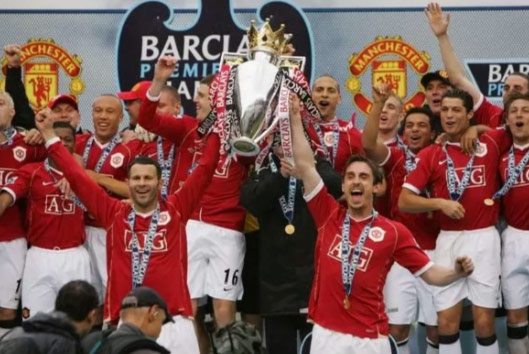
Manchester United holds the record for the most championships in England, with 20 titles, including 13 in the Premier League era. They have won the Champions League three times (1968, 1999, 2008), as well as the Cup Winners' Cup and the Europa League. The club also boasts 12 FA Cups, 6 League Cups, and numerous Super Cups. These achievements are more than just statistics — they are stories of heroes, from Bobby Charlton, who scored 249 goals, to Cristiano Ronaldo, who returned in 2021 and scored 24 goals in that season.
Here are the key trophies in a structured format for clarity:
Trophy |
Number of wins |
Last year |
Key players |
English Championship / Premier League |
20 |
2013 |
Ryan Giggs, Wayne Rooney |
Champions League |
3 |
2008 |
Cristiano Ronaldo, Paul Scholes |
FA Cup |
12 |
2016 |
Marcus Rashford, Jesse Lingard |
League Cup |
6 |
2023 |
Bruno Fernandes |
Europa League |
1 |
2017 |
Paul Pogba |
This table is based on data from uefa.com and the club's official website. It illustrates United's dominance, but behind each trophy lie emotions: the joy of fans at Old Trafford and the heartbreak after defeats. Records, such as the longest winning streak in the league (14 matches in 1905), underscore the club’s historical greatness.
The modern era: challenges and new horizons
After Ferguson's departure in 2013, United faced turbulence. Coaches such as David Moyes, Louis van Gaal, and José Mourinho brought some trophies, including the 2017 Europa League, but stability was lacking. The Ole Gunnar Solskjær era revived the spirit of the past, reaching the 2021 Europa League final, though the penalty shootout defeat to Villarreal was a painful reminder of what was missing. In 2022, Erik ten Hag took the helm, winning the 2023 League Cup — the club’s first trophy in six years.
As of 2025, the club is fighting for top spots in the Premier League, with players like Marcus Rashford and Bruno Fernandes leading the charge. The owners, the Glazer family, face criticism from fans over commercialisation, but investment in the academy promises new talent. Recent victories, such as the triumph over Manchester City in the 2024 FA Cup, show that the spirit of the Devils remains strong. This era is about adapting to modern football, where money and tactics play a key role, but it is the legacy that makes United enduringly special.
Fans dream of a return to the very top, and with new signings for the 2025/2026 season, the club looks ready for fresh conquests. This is not the end of the story — it is the continuation of a saga full of surprises.
Interesting facts about Manchester United
-
Old Trafford seats over 74,000 spectators and is famously known as the ‘Theatre of Dreams’ — a nickname given by Bobby Charlton because it is where fans’ dreams come true.
-
The nickname ‘Red Devils’ dates back to the 1960s, inspired by a French rugby team, and symbolises an aggressive style of play that intimidates opponents.
-
Ryan Giggs played 963 matches for the club — a record that makes him an eternal symbol of loyalty, like a lasting flame in the heart of Manchester.
-
After the Munich tragedy, the club received global support, with even Real Madrid helping by loaning players — an act of solidarity that demonstrates how football can be a global family.
-
In 1999, the treble made United the first English team to achieve this feat, and Solskjaer’s goal in the final remains a moment that gives fans goosebumps.
These facts add charm to the club’s history, making it more than just a series of dates, but a living legend. They highlight how Manchester United has influenced culture, inspiring films, songs, and even fashion. |