Manchester United fixtures draw steady attention from supporters, broadcasters and platforms that set expectations, including online betting sites whose pre-match pricing reflects form, squad news and historical performance. Instead of predictions, the focus here is on the football factors that influence results across a Premier League season.
This season Manchester United have beencreating a healthy amount of chances. Across league matches they average roughly 1.8 expected goals, with around 16 shots and five to six of those hitting the target. It is not always tidy in the final third, but the volume of attempts shows they can force opponents back and spend long spells around the box.
Scheduling and competition load
Premier League seasons are rarely linear. United move through stretches with matches every three or four days, then slower phases that allow for full training sessions and tactical adjustments. February offers a clear example. United face Fulham at Old Trafford on Sunday, 1 February, Tottenham Hotspur at Old Trafford on Saturday, 7 February, and West Ham United away on Tuesday, 10 February.
Sports performance research links shorter recovery windows to drops in sprint output and reaction speed. When matches are spaced tightly, clubs often shift from full training to walkthroughs and recovery work. These choices influence pressing intensity, rotational decisions and how much risk can be taken in possession. None of this guarantees a particular result, but it helps explain performance fluctuations that are not always visible in league tables.
Availability and positional structure
Another consistent influence on match outcomes is player availability. It is not simply a matter of how many players are missing but which positions they occupy. When central defenders or holding midfielders are unavailable, United are more likely to adjust build-up patterns and adopt more conservative spacing. When creative attackers are missing, the team may dominate territory without producing the same volume of high-value chances.
The current league season illustrates that balance. United’s expected goals output suggests they generate consistent opportunities, but the defensive side of the game demands coordination between full backs, midfielders and centre backs. Availability affects subtler elements such as how quickly the ball can be progressed through midfield and how well transitions are controlled when possession is lost. Substitutions are influenced as well. If like-for-like replacements exist, the structure remains familiar. If they do not, tactical reshapes become more likely, which changes how matches unfold in the final 30 minutes.
Opponent profiles and match flow
Premier League opposition present distinct tactical questions. Some press from the first phase, forcing defenders to make quicker choices. Others sit in compact mid-blocks and challenge United to break down five- and four-man lines with patience and width. These different profiles shape the match flow more than formation labels.
Fulham, who arrive in the coming week, often defend in organised shapes and advance through the flanks when possession turns over. Against that model, ball circulation in the half spaces becomes important, and chance creation relies on timing rather than volume. Tottenham, due at Old Trafford a few days later, tend to engage higher and contest central lanes more aggressively. That match typically asks more of United’s build-up and press resistance. These nuances often separate matches that feel controlled from those that become transitional even when the scorelines appear similar.
Old Trafford and away conditions
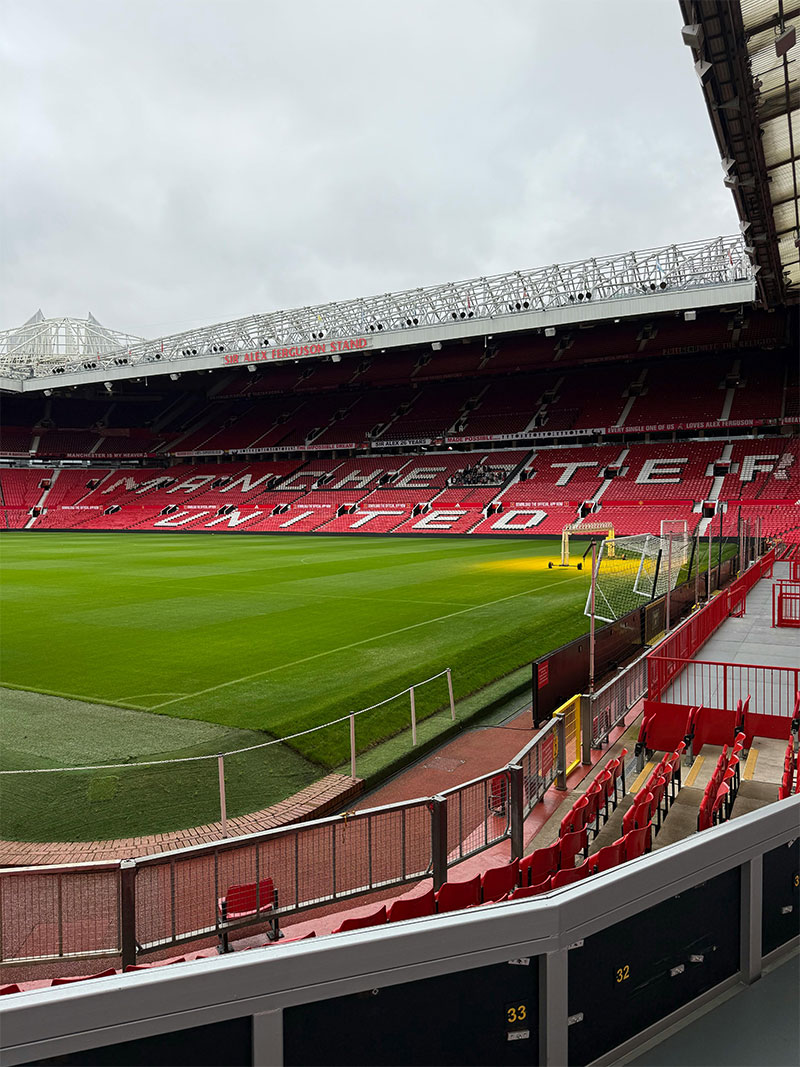
Venue remains a reliable lens through which to interpret results. Across the Premier League, home teams continue to produce stronger points totals and more favourable expected goals differentials, even accounting for the gradual decline of home advantage over the past decade. Old Trafford offers familiarity in pitch conditions and environment and carries an atmosphere that shapes the tempo of matches.
United’s home performances in the current season reflect that pattern, with fewer clear chances conceded and more sustained attacking phases compared to away fixtures. On the road, matches often involve more turnovers, wider spacing and higher volatility. With two consecutive home fixtures against Fulham and Tottenham before travelling to West Ham, the schedule provides an opportunity to consolidate performances before re-entering a run of away commitments. It also offers analysts a useful sample to compare behaviours in possession and out of possession between home and away conditions, which can reveal trends in spacing, distance covered and pressing cohesion. Supporters usually notice these patterns in real time even without numbers, because matches at Old Trafford often feel more territorial, while away games present longer counterattacking sequences and more broken play.
Putting the elements together
Manchester United results over the course of a season reflect more than form or individual moments. Fixture rhythm influences preparation. Availability shapes positional balance. Opponent profiles determine whether matches tighten or stretch. Venue provides a platform that quietly shifts probabilities. With Fulham and Tottenham visiting Old Trafford before a midweek trip to West Ham, these elements will again be visible in how Manchester United navigate the opening weeks of February. Observing those structures offers a grounded way to understand performances without relying on speculation or prediction. As the season develops, these same factors will continue to act as reference points for analysts and supporters assessing where United stand relative to both their own standards and the competitive demands of the league.