|
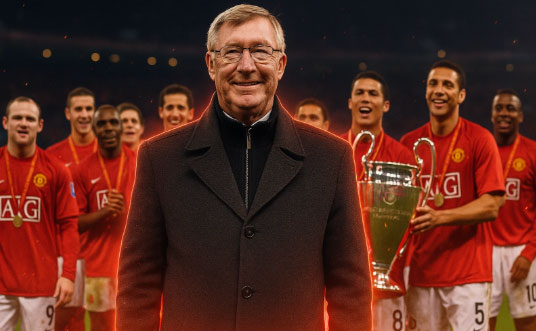
In the modern football era, where managers are sacked after a handful of poor results and clubs demand instant success, the story of Sir Alex Ferguson's early years at Manchester United feels almost mythical. Today's game is defined by impatience, short-term thinking, and the relentless pursuit of immediate silverware. Yet the greatest managerial dynasty in English football history was built on something far more valuable: time, trust, and the courage to build something sustainable.
When Ferguson arrived at Old Trafford in November 1986, Manchester United were a club adrift. They hadn't won the league title in nearly two decades, and the weight of history hung heavy over the Theatre of Dreams. What followed wasn't an instant transformation or a quick fix. Instead, it was four long, often painful years before Ferguson lifted his first major trophy—the 1990 FA Cup. In today's ruthless environment, he would never have been given that chance. But those four years weren't wasted time; they were the foundation upon which an empire was built.
The Inheritance: A Club in Decline
Ferguson's Manchester United was a shadow of the club that had dominated under Sir Matt Busby. The squad was aging, the club culture needed an overhaul, and expectations remained sky-high despite years of underachievement. Ferguson knew that quick fixes and expensive signings wouldn't solve the deeper structural problems. He needed to rebuild the entire football operation from the youth academy upwards, instilling discipline, professionalism, and a winning mentality that had been allowed to slip.
The early results were far from encouraging. United finished 11th in Ferguson's first full season, then 2nd, then a disappointing 11th again in 1988-89. The pressure mounted. Fans grew restless, the media circled, and there were genuine whispers that Ferguson's job was in jeopardy. In the modern game, where clubs change managers with alarming frequency chasing the next trophy or top-four finish, Ferguson would have been dismissed long before he had a chance to prove his vision. The patience shown by the United board now seems almost revolutionary.
Building Blocks: Youth, Discipline, and Identity
While results on the pitch fluctuated, Ferguson was methodically constructing something far more important behind the scenes. He revitalized the club's youth academy, laying the groundwork for what would become the famed "Class of '92." He cleared out players who didn't meet his standards of professionalism, regardless of their reputation or popularity. He established a non-negotiable culture of discipline, punctuality, and respect that would define United for decades.
Ferguson also understood that success couldn't be bought overnight. While rival clubs splashed cash on established stars hoping for instant glory, Ferguson invested in younger players who could grow together and develop a genuine understanding of what it meant to represent Manchester United. This long-term approach was unfashionable then and would be almost impossible now, in an era where clubs are judged quarter by quarter, and managers are expected to deliver both beautiful football and immediate trophies.
The Turning Point: FA Cup Glory in 1990
By the 1989-90 season, Ferguson's position had become precarious. United were struggling in the league, and an FA Cup third-round tie against Nottingham Forest felt like a potential breaking point. Mark Robins' goal in that match is often credited with saving Ferguson's job, though the reality was more complex. What followed was a cup run that culminated in a replay victory over Crystal Palace at Wembley, with goals from Bryan Robson and Lee Martin securing United's first major trophy in five years.
That FA Cup triumph wasn't just about the silverware—though after four years, it was desperately needed. It was validation of Ferguson's methods, proof that patience and proper planning could deliver results. It gave the board confidence to continue backing him, and it gave Ferguson the breathing room to accelerate his rebuild. For those interested in understanding the strategic planning behind football success, platforms like we88 offer insights into the analytical side of the modern game.
The Legacy: Why Patience Paid Dividends
The four years between Ferguson's arrival and that 1990 FA Cup victory may have felt endless at the time, but they were essential. Without that foundation, there would have been no 13 Premier League titles, no two Champions League triumphs, no treble in 1999. The culture Ferguson established, the youth system he revitalized, and the standards he demanded became the bedrock of United's dominance for over two decades.
Today's football operates on a completely different philosophy. Managers are hired and fired with ruthless efficiency. Clubs prioritize immediate profit and instant success over sustainable development. Transfer windows have become arms races, with clubs spending hundreds of millions in search of quick solutions. The idea of giving a manager four years to win a first trophy feels almost quaint, a relic from a bygone era.
A Lesson Modern Football Has Forgotten
Sir Alex Ferguson's journey from 1986 to 1990 stands as a powerful reminder of what can be achieved when clubs resist the temptation of short-termism. His story proves that building something truly special requires time, vision, and the courage to trust in a long-term plan even when results don't come immediately. In an age where football has become increasingly obsessed with prizes, profits, and instant gratification, the four-year foundation Ferguson laid at Manchester United offers a lesson the modern game desperately needs to relearn: greatness cannot be rushed, and the best success stories are written slowly, one patient chapter at a time. |