Football Families Pass Down More Than Names
Football has always been a family business for some. Fathers teach sons. Uncles scout nephews. Brothers coach each other. In 2026, the most successful coaching dynasties have refined this model into something almost industrial.
The Maldini name carried through three generations. The Alonso family produced a World Cup winner and a Champions League coach. The Ancelotti bloodline gave Europe two different trophy-winners. Understanding how these families operate reveals a lot about where the game’s deepest knowledge actually lives.
The Maldinis – Defence as Inheritance
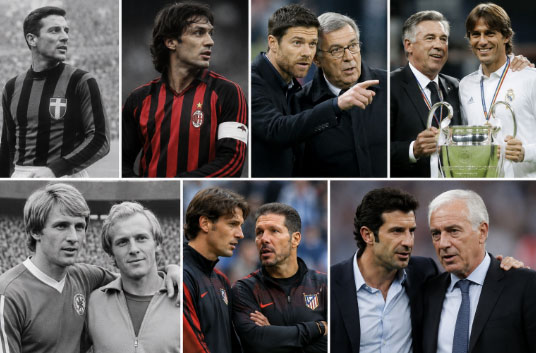
Cesare Maldini captained Milan to their first European Cup in 1963. His son Paolo became the greatest defender of all time at the same club. Paolo’s son Daniel? Played for Milan too, though not with the same success. The defensive intelligence skipped none of them. What got passed down wasn't just genetics. It was reading the game from the back, knowing when to step and when to hold, understanding that defending is mostly anticipation.
Repeat Behaviour Shows Up Across Different Industries
An operator, including Australia $1 deposit casino online, tracks session patterns to understand player preferences without requiring direct input. A $1 deposit casino Australia app can store those preferences securely, allowing returning players to continue from where they left off. Pokies online platforms use similar behavioural data to personalise game suggestions, while $1 minimum deposit casino operators know that loyalty is built through consistency rather than flashy one-off offers.
New users complete registration in under two minutes, and first deposits often trigger a matched bonus up to a certain amount. Withdrawal requests to e-wallets typically clear within 24 hours, while bank transfers take two to three business days.
Other Football Families That Made Their Mark
The Maldini story is the most famous, but far from the only one. Here are a few other clans where football runs through the bloodstream.
-
The Alonsos – Periko Alonso won La Liga with Real Sociedad. His son Xabi won the World Cup and Champions League, then became a highly rated manager. Another son, Mikel, played for several Spanish clubs. The intelligence gene clearly made the trip.
-
The Ancelottis – Giuseppe Ancelotti played lower league football. His son Carlo became one of the most decorated managers ever. Carlo’s son Davide works as his assistant and will likely take over a top club soon. The pattern repeats.
-
The Laudrups – Michael and Brian both played at the highest level. Michael’s son Rasmus now plays professionally. The passing of the torch skipped a generation but didn't die.
These families share more than DNA. They share a football education that started before formal coaching. Dinner table discussions about tactics. Youth matches analysed by former pros. Connections made through fathers' networks. The outsider can't buy that.
What Makes a Coaching Dynasty Different from a Playing One
A playing dynasty gives you talent. A coaching dynasty gives you wisdom. The difference matters. Players inherit physical gifts but still need to develop them. Coaches inherit a philosophy and a method, which can be taught and refined across decades. The Maldinis passed down defending. The Alonsos passed down midfield intelligence. The Ancelottis passed down man-management. They're ways of seeing the game that only come from years inside it.
Where the Next Generation Is Coming From
Several young names are already being watched as the next link in their family chains.
-
Giovanni Simeone – Son of Diego Simeone, already managing in Argentina's top flight. The same intensity. Same tactical clarity. Just less screaming on the touchline.
-
Luis Figo Jr – Not a famous player yet, but working as a youth coach in Portugal. The name opens doors. The results will determine whether he stays.
-
Frank Lampard's nephew – Still early, but the Lampard name carries weight. English football loves a family connection.
Will these names become dynasties or footnotes? Too early to tell. But the fact they're being watched proves the pattern hasn't faded.
Why Dynasties Matter Beyond Nostalgia
Sentiment aside, football families serve a practical purpose. They keep institutional knowledge inside clubs when everyone else leaves for better paychecks. A Maldini who stays at Milan for thirty years knows the academy graduates, the local scouts, the club doctors. That knowledge doesn't appear on a spreadsheet. It lives in relationships built over decades. Clubs without dynasties lose that accumulated wisdom every few seasons. The result is wheel-spinning. |