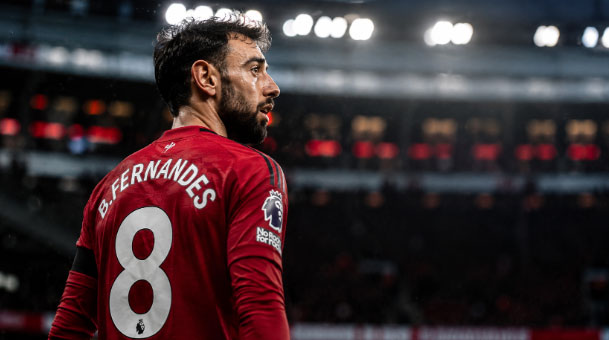
How Bruno Fernandes Became Manchester United’s Assist King
Bruno Fernandes did not become Manchester United’s assist king by playing neat, safe football. He did it by living in the risk: early crosses, fast corners, first-time passes into crowded lanes, and the sort of clipped ball that can make a striker look half a yard quicker than he is. By the end of 2025-26, the number was hard to dodge: 21 Premier League assists, a new competition record, one ahead of Thierry Henry’s 20 for Arsenal in 2002/03 and Kevin De Bruyne’s 20 for Manchester City in 2019-20. For United, the season finished with third place, Champions League qualification, and a captain whose passing had stopped being a talking point and had become the structure of the side.
The Record Fell on the South Coast
The record-breaking assist came at the Amex Stadium on 24 May 2026, with United beating Brighton 3-0 on the final day. Fernandes whipped in a corner in the 33rd minute, Patrick Dorgu attacked it, and the header gave United the lead before Bryan Mbeumo and Fernandes himself finished the match off. It was not a Hollywood pass, just a hard delivery into a dangerous zone, the sort of set-piece service that punishes one bad body position. That was the point. Assist No. 21 looked routine because the routine had become elite.
Beckham’s Mark Went First
Before Fernandes chased the Premier League record, he had already gone past David Beckham’s Manchester United benchmark. On 15 March 2026, the Premier League reported that his 2 assists in a 3-1 win over Aston Villa took him to 16 for the league season, moving him beyond Beckham’s 15 in 1999-2000. That number mattered at Old Trafford because Beckham’s delivery had long been the reference point for wide free-kicks, early crosses, and dead-ball menace. Fernandes reached the mark in a different way: less chalk on the boots, more movement across the right half-space, more short set-piece variation, more willingness to hit the pass before the run looked obvious.
Carrick Gave Him Air
Michael Carrick’s January appointment as head coach changed the temperature around United, and Fernandes was one of the clearest beneficiaries. United later confirmed Carrick would continue as head coach after a run that put the club back into the Champions League places, with Fernandes supplying the kind of control that had been missing during the messier autumn. Supporters checking line-ups, player props, and live markets on matchdays often treat chance creation as its own scoreboard and download the Melbet app (Arabic: تحميل تطبيق ميلبيت), which fits naturally into that second-screen routine where corners, assists, bookings, and in-play prices are watched alongside the actual football. Fernandes suited that attention because his game produced visible events: a corner landing on Dorgu’s head, a cut-back finding Mbeumo, a diagonal forcing the full-back to turn. Some players influence games quietly. Bruno leaves receipts.
The First Assist Came Late
One odd detail makes the record stranger: Fernandes did not register his first Premier League assist of the campaign until 19 October. The Premier League notes that it came at Anfield, where he set up Harry Maguire for the winner in United’s 2-1 victory over Liverpool. From there, the pace became absurd. A player who had no assists by mid-October finished with 21 by late May, which says something about role, team form, and nerve more than any tidy chart could manage. United did not simply have a creator; it had a captain who kept demanding the ball when matches tilted.
The Chances Kept Coming
Sky Sports credited Fernandes with 136 chances created in the 2025-26 Premier League season, second only to Mesut Özil’s 146 for Arsenal in 2015-16 since records of that type began in 2003/04. That figure explains why the assists did not feel fluky. He created from corners, from the right channel, from central pockets after United recovered second balls, and from quick restarts when defenders were still pointing at each other. The small match detail at Brighton was typical: his record-breaking pass came from a corner, but he still created more chances than anyone else on the pitch that day, with 4. Volume met edge.
Not Giggs, Not Rooney, But His Own Lane
There is a necessary distinction here for United historians. Ryan Giggs still owns the all-time Premier League assist record with 162, and Wayne Rooney remains one of the club’s great all-round creators, so Fernandes has not erased that old order. What he has done is produce the greatest single-season creative output the Premier League has seen. Sky also noted that Fernandes had scored and assisted in 19 Premier League matches for United, behind only Rooney’s 35 and Giggs’s 22 for the club. That is the territory he now occupies: not a winger in the old Giggs sense, not a No. 9 in the Rooney sense, but a No. 8/10 hybrid who bends matches through repetition.
A Captaincy Measured in Passes
The assist record did not make Fernandes a different player; it made the old complaints sound thinner. The pointing, the arms out, the passes that fly straight into traffic, because all of it was still there. United just needed more of the good than the tidy. Third place was not built by keeping the ball warm in midfield, and Carrick’s side needed someone willing to waste 3 passes if the fourth one split a back line. Fernandes kept taking that pass, and by May, the argument had 21 answers. |